

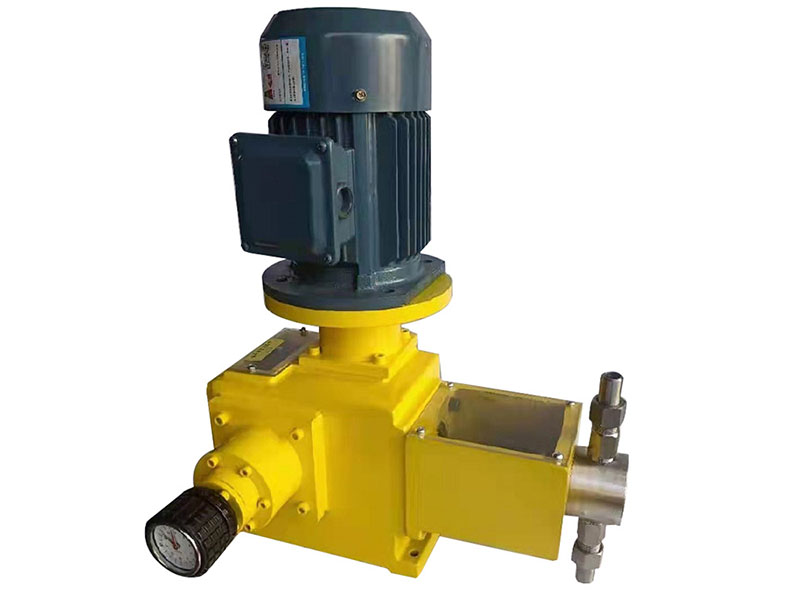
Sludge screw pumps are widely used in wastewater treatment, industrial sludge handling, and process engineering.
Understanding the key differences between sludge screw pumps and other pump types is essential for engineers,
plant operators, and designers who need reliable, low-maintenance sludge transfer equipment.
This in?depth guide explains how sludge screw pumps work, compares them with other common sludge pumps,
and provides practical selection criteria for real-world applications.
A sludge screw pump is a positive displacement pump designed specifically for pumping
viscous, abrasive, or solids-laden media such as sewage sludge, digested sludge, and industrial slurries.
In many contexts, the term “sludge screw pump” refers to a progressive cavity pump or
related single-screw design that handles sludge with minimal shear and pulsation.
In its typical form, a sludge screw pump consists of:
When the rotor turns inside the stator, cavities form and progress from suction to discharge,
transporting the sludge in a continuous, low-pulsation flow. This makes sludge screw pumps
particularly suitable for shear-sensitive and high-solids applications.
Sludge screw pumps are a type of rotary positive displacement pump.
The core component is the interaction between a helical rotor and a molded stator cavity.
The progressive cavity principle can be summarized as:
Because the cavities are sealed and the movement is progressive, the pump delivers:
For sludge applications, progressive cavity sludge screw pumps are designed to handle:
In contrast to high-speed centrifugal pumps, screw pumps operate at relatively low rotational speeds,
reducing wear, noise, and shear forces on the sludge.
To understand the key differences, it is useful to briefly review other pump types used for sludge handling.
These include:
Centrifugal sludge pumps use a rotating impeller to impart kinetic energy to the fluid,
which is then converted to pressure energy. They are commonly used for:
However, centrifugal pumps can struggle with very thick, viscous, or non-Newtonian sludge
and can experience reduced efficiency when pumping high solids content.
Submersible sludge pumps are usually centrifugal pumps designed to operate submerged in the sump or pit. They:
They may not be ideal for precise metering or very thick, dewatered sludge, where screw pumps or other positive displacement pumps perform better.
Diaphragm pumps, including air-operated double diaphragm (AODD) pumps, use reciprocating diaphragms and check valves to move fluid.
They are commonly used for:
They can handle sludge but may have more pulsation, lower flow rates, and higher air consumption compared to sludge screw pumps.
Peristaltic pumps compress a flexible hose or tube with rotating rollers or shoes, pushing the fluid along. They are suited for:
However, hose wear and energy consumption at higher flows can be significant compared to screw pumps.
Piston and plunger pumps are reciprocating positive displacement pumps. They deliver:
They can handle thick sludge but produce significant pulsation and require pulsation dampeners for process stability.
Archimedean screw pumps are large open-channel screws used mostly for:
They are different from enclosed progressive cavity sludge screw pumps but share the basic concept of a rotating screw transporting water or sludge.
The main differences between sludge screw pumps and other pump technologies relate to:
| Pump Type | Flow Characteristic | Pressure Range (Typical) | Pulsation |
|---|---|---|---|
| Sludge screw (progressive cavity) | Nearly constant flow; proportional to speed | Up to medium-high pressures (e.g., 6–24 bar, design-dependent) | Low pulsation |
| Centrifugal sludge pump | Flow varies with system curve; less accurate control | Typically low to medium (e.g., 2–10 bar) | Low pulsation but variable with operating point |
| Submersible sludge pump | Similar to centrifugal behavior | Low to medium | Low pulsation |
| Diaphragm pump | Flow changes with stroke rate; good control but intermittent discharge | Low to medium | High pulsation unless damped |
| Peristaltic pump | Flow proportional to speed; good for dosing | Medium to high (depending on hose and design) | Moderate pulsation; more at low speed |
| Piston / plunger pump | Accurate, positive displacement | Very high pressures possible | High pulsation; requires dampeners |
| Archimedean screw pump | High volume with low head | Very low head (often <10 m) | Low pulsation, continuous |
Sludge screw pumps are specifically optimized to handle thick, viscous, and solids-laden sludge without losing capacity.
They can operate efficiently in conditions where centrifugal and some other pumps lose performance or become unstable.
| Pump Type | Solids Handling Capability | Viscosity Range (Relative) | Typical Sludge Types |
|---|---|---|---|
| Sludge screw (progressive cavity) | High solids (depending on design: from low to very thick sludge) | From low viscosity to high, non-Newtonian sludge | Primary, secondary, digested, thickened, and dewatered sludge |
| Centrifugal sludge pump | Moderate solids; limited by impeller design and particle size | Low to medium viscosity; performance drops at high viscosity | Raw sewage, return activated sludge, mixed liquor |
| Submersible sludge pump | Moderate solids; may clog with fibrous materials | Low to medium viscosity | Sewage pits, stormwater, light slurries |
| Diaphragm pump | Can handle solids, depending on valve design | Medium to high viscosity | Industrial sludges, chemical slurries |
| Peristaltic pump | Excellent solids handling; full-bore passage | Low to very high viscosity | Abrasive sludge, lime slurry, chemical sludges |
| Piston / plunger pump | High solids possible but depends on valves and seals | Medium to high viscosity | High-pressure sludge feeding, filter press feed |
| Archimedean screw pump | Handles raggy and coarse solids effectively | Low to medium viscosity (open channel) | Raw sewage, stormwater, surface water |
Energy efficiency depends heavily on the operating point. In general:
When sizing pumps for sludge, total lifecycle cost (initial cost, energy, maintenance, downtime, and spare parts) is more important than
purchase price alone. Sludge screw pumps often provide favorable lifecycle costs for continuous, high-duty sludge transfer.
| Pump Type | Key Wear Parts | Maintenance Frequency (Relative) | Typical Reliability Features |
|---|---|---|---|
| Sludge screw (progressive cavity) | Rotor, stator, mechanical seal, joint components | Moderate; wear depends on abrasiveness and speed | Low-speed operation, robust design, predictable wear |
| Centrifugal sludge pump | Impeller, wear rings, mechanical seal | Low to moderate; sensitive to abrasion and clogging | Simple design; many standard spare parts available |
| Submersible sludge pump | Impeller, seals, bearings | Moderate; requires lifting for major service | Submersible motor protection, cooling via liquid |
| Diaphragm pump | Diaphragms, check valves, seats | Moderate to high; diaphragm fatigue and wear | Can run dry; simple wet end |
| Peristaltic pump | Hose or tube, rollers/shoes | Hose replacement is the main regular service | Only hose in contact with sludge; easy to isolate |
| Piston / plunger pump | Plunger seals, valves | Moderate; high-pressure components need attention | Robust for high pressure, but more complex |
| Archimedean screw pump | Bearings, lower support, surface wear | Low; long service life with proper alignment | Very robust for coarse solids and debris |
When comparing sludge screw pumps to other pump types, several key advantages stand out,
especially for sludge and slurry applications.
Despite their many advantages, sludge screw pumps are not always the best choice for every application.
Understanding their limitations relative to other pumps is important for correct selection.
The most common comparison in wastewater treatment is between sludge screw pumps
and centrifugal sludge pumps. Each has specific strengths.
| Aspect | Sludge Screw Pump | Centrifugal Sludge Pump |
|---|---|---|
| Principle | Positive displacement (progressive cavity) | Dynamic (centrifugal force) |
| Best For | Thickened sludge, variable viscosity, accurate feed | Large flows of relatively low-viscosity sludge or sewage |
| Flow Control | Directly proportional to speed, good metering | Depends on system curve; less accurate at variable head |
| Viscosity Sensitivity | Low sensitivity; maintains capacity over wide range | High sensitivity; capacity drops with increasing viscosity |
| Solids Handling | High solids and fibrous content (with suitable design) | Moderate solids; risk of clogging with rags and stringy material |
| Shear | Low shear, gentle pumping | Higher shear, particularly at high speed |
| Self-Priming | Self-priming with correct configuration | Generally not self-priming unless special design |
| Energy Efficiency at High Viscosity | Good efficiency; predictable power draw | Reduced efficiency; high power for small flow |
| Initial Cost | Medium to high | Low to medium |
| Maintenance | Periodic rotor/stator replacement; low-speed wear | Impeller and seal maintenance; potential clog removal |
| Typical Use in WWTP | Thickened sludge transfer, digested sludge, dewatered sludge feed | Raw sewage pumping, return activated sludge, mixed liquor |
Choose sludge screw pumps when:
Choose centrifugal sludge pumps when:
Sludge screw pumps are often compared with peristaltic and diaphragm pumps in
applications where high solids and chemical resistance are important.
While exact specifications depend on the manufacturer and model, typical engineering parameters for sludge screw pumps used in wastewater and industrial sludge handling include:
| Parameter | Typical Range | Notes |
|---|---|---|
| Flow rate | 0.1 to 300 m3/h (or more with large units) | Size and speed dependent; very wide range available |
| Differential pressure | Up to ~24 bar or higher (multi-stage) | Each “stage” of the pump contributes to the maximum pressure |
| Solids content | From dilute slurries to thickened sludge (e.g., 2–12% DS, higher with special designs) | Real limit depends on rheology, feed arrangement, and inlet design |
| Viscosity | From water-like to highly viscous, non-Newtonian fluids | Performance largely unaffected as long as pump is filled and suction conditions are adequate |
| Rotational speed | Typically 50–400 rpm for sludge service | Low speed reduces wear; higher speed increases capacity but may reduce life |
| Temperature | Ambient to approx. 80–120 °C (elastomer and design dependent) | High temperatures require suitable elastomers and cooling considerations |
| Materials (wetted parts) | Cast iron, stainless steel, specialty alloys, elastomers (NBR, EPDM, FKM, etc.) | Selected according to sludge chemistry, abrasiveness, and temperature |
| Sealing options | Mechanical seals, packed glands, cartridge seals | Selection depends on leakage tolerance and maintenance philosophy |
| Installation orientation | Horizontal, inclined, or vertical (depending on design) | Orientation chosen to suit space, suction conditions, and process layout |
Several design variants exist to optimize sludge screw pumps for specific sludge types and operating conditions.
Selecting the right pump for sludge handling involves evaluating process conditions, sludge characteristics,
and plant objectives. Sludge screw pumps are typically the best choice when one or more of the following apply:
To obtain the full benefits of sludge screw pumps compared to other pump types,
installation and operation must be carefully engineered.
Although each application is unique, some general trends can be observed when comparing sludge screw pumps
to other pump types over the equipment lifecycle.
| Cost Element | Sludge Screw Pump (Progressive Cavity) | Centrifugal Sludge Pump | Peristaltic / Diaphragm Pump |
|---|---|---|---|
| Capital Cost | Medium to high | Low to medium | Medium |
| Installation Cost | Moderate; requires alignment and base | Moderate; often simpler piping | Low to moderate; compact and simple |
| Energy Cost (for high-viscosity sludge) | Generally favorable; efficient at design point | Higher; reduced hydraulic efficiency | Moderate to high; depends on duty cycle |
| Maintenance Cost | Moderate; rotor/stator replacements predictable | Moderate; may have more frequent interventions for clogging | Hose/diaphragm replacements; can be significant over time |
| Downtime Impact | Low with planned maintenance and spares | Potentially higher if clogging or cavitation occurs | Low for small units; quick component changes |
For continuous, high-duty sludge transfer, the lifecycle cost advantages of sludge screw pumps
over other technologies can be substantial, particularly where process stability and energy efficiency
are critical.
The table below summarizes the most important differences between sludge screw pumps and other common pump types in sludge applications.
| Feature | Sludge Screw Pump | Centrifugal / Submersible | Peristaltic / Diaphragm | Piston / Archimedean |
|---|---|---|---|---|
| Pumping Principle | Positive displacement (progressive cavity) | Dynamic (centrifugal) | Positive displacement (peristaltic / reciprocating) | Positive displacement (reciprocating / open screw) |
| Best Use Case | Thickened sludge, high solids, stable feed | Large volumes of relatively thin sludge or sewage | Dosing, abrasive or corrosive sludges, intermittent duty | Very high pressure (piston) or very low head, huge flow (Archimedean) |
| Flow Stability | Very stable, low pulsation | Depends on system curve; stable but less controllable | Good average control but more pulsation | Strong pulsation (piston) or smooth (Archimedean) |
| Viscosity and Solids | Excellent capability | Limited at high viscosity and solids | Excellent, with suitable hoses/valves | Good to excellent, depending on design |
| Shear | Low shear | Medium to high shear | Low to medium shear | Low to medium shear |
| Self-Priming | Yes (with correct design) | Generally no (special cases exist) | Yes (peristaltic and many diaphragm) | Varies by type |
| Energy Use at High Viscosity | Efficient and predictable | Less efficient, higher power draw | Moderate; can be high at larger flows | Application-dependent |
| Typical WWTP Roles | Thickened/digested sludge transfer, dewatered sludge feed | Raw sewage, RAS, mixed liquor pumping | Sludge and chemical dosing, abrasive slurries | High-pressure sludge feed (piston), inlet lift (Archimedean) |
Sludge screw pumps differ fundamentally from other pump types in their positive displacement
progressive cavity design, ability to handle high solids and viscosity, and capability to provide
stable, low-shear, self-priming sludge transfer. Compared with centrifugal, peristaltic, diaphragm, piston,
and Archimedean screw pumps, sludge screw pumps offer distinct advantages in many wastewater and industrial sludge applications,
especially where consistent feed, energy efficiency under viscous conditions, and gentle handling are important.
For engineers and plant operators, understanding these key differences is essential for selecting the most suitable pump
for each sludge handling duty. When properly sized, installed, and maintained, sludge screw pumps can deliver long-term,
reliable performance and optimized lifecycle costs in challenging sludge environments.
```

Copyright ? Jiangsu Longjie Pump Manufacturing Co., Ltd.



 Phone
Phone
Comment
(0)