

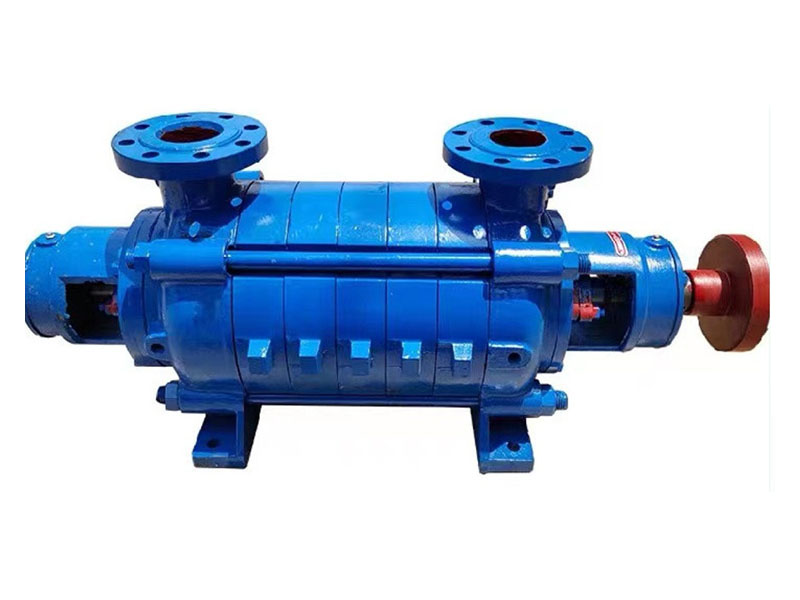
Vertical Screw Pumps: Features and Benefits
Vertical screw pumps are widely used in industrial, municipal, and process applications for handling viscous,
abrasive, and solids?laden fluids in a compact footprint. This in?depth guide explains the definition,
working principle, main features, key benefits, typical applications, and general specification ranges of
vertical screw pumps, providing SEO?friendly reference content for engineers, designers, buyers, and plant operators.
A vertical screw pump is a positive displacement pump that uses one or more rotating screw?shaped
elements to convey liquid along the pump axis, with the pump configuration arranged in a vertical orientation.
The pumping elements are installed vertically, with the drive either above or below the wet end,
allowing the pump to be immersed in a sump, pit, tank, or well, or to occupy a very small floor area.
Vertical screw pumps are sometimes described as:
Vertical progressive cavity pumps (when based on helical rotor–stator design)
Vertical single screw pumps (single?screw configuration)
Vertical multi?screw pumps (two?screw or three?screw configurations)
Vertical pit screw pumps or vertical sump screw pumps (installed in pits/tanks)
Unlike centrifugal pumps, which convert rotational energy into dynamic pressure, vertical screw pumps
transfer fluid by trapping a fixed volume of liquid and moving it along sealed cavities, resulting in
a nearly constant flow rate that is largely independent of discharge pressure within the design limits.
The operating principle of a vertical screw pump is based on positive displacement. Although design details vary,
the core concept remains similar across single?screw and multi?screw variants:
The rotating screw (or screws) creates sealed cavities or chambers with the pump housing or stator.
As the screw rotates, these cavities open on the suction side, creating a low?pressure zone that draws liquid into the pump.
The trapped volume of liquid is transported axially along the screw as the cavities move from the suction end to the discharge end.
At the discharge side, the cavities close, pushing the liquid out of the pump at a relatively uniform, pulsation?reduced flow.
In a vertical progressive cavity screw pump, a single metallic helical rotor turns inside an elastomeric (or sometimes metallic)
helical stator. The rotor has one helix and the stator has two helices with double pitch. The interaction between
rotor and stator forms cavities that progress from suction to discharge as the rotor turns, moving fluid vertically
with low pulsation and gentle shear.
In a vertical two?screw or three?screw pump, intermeshing screws rotate in opposite directions (for twin?screw designs)
or in a driven?idler arrangement (for three?screw designs). The screw flanks form sealed chambers between the screw
threads and the pump casing. Fluid is carried along these chambers from the suction port at the bottom of the pump
to the discharge port at a higher elevation.
The vertical orientation is a defining feature of vertical screw pumps and offers several design and installation advantages.
Space?saving footprint: The pump occupies minimal floor area, ideal for congested plants and retrofit projects.
Direct sump or pit installation: Vertical screw pumps can be suspended in pits, tanks, wells, or basins, reducing suction pipework and improving NPSH conditions.
Flexible shaft or drive shaft options: The drive can be located above the tank, connected via a rigid or flexible shaft to the screw element.
Dry or wet installation: The motor and gearbox are typically mounted in a dry location above the liquid level, while only the hydraulic end is immersed.
Ease of inspection from top: In many designs, the rotor, stator, or screw elements can be removed upward without disturbing suction or discharge piping.
Vertical screw pumps incorporate a range of design features that enable reliable transport of challenging fluids,
including viscous, abrasive, shear?sensitive, and solids?laden slurries.
Positive displacement performance: Nearly constant flow regardless of system pressure within rated limits.
Self?priming capability: Can lift liquid from below the pump centerline, beneficial in sump and pit applications.
High suction lift potential: Good NPSH characteristics due to vertical immersion and flooded suction options.
Low shear pumping: Gentle handling of shear?sensitive products such as emulsions, polymers, and biological media.
Low pulsation flow: Progressive cavity and multi?screw geometries reduce vibration and pulsation compared with many other positive displacement pumps.
Broad viscosity range: Capable of handling from thin liquids to extremely high?viscosity sludges and pastes (depending on specific design).
Solids handling: Can handle fibrous, abrasive, and chunky solids in wastewater, sludge, and industrial slurries.
Vertical rotor/shaft alignment: Ensures compact installation and simplifies tank entry.
Variety of materials: Casings in cast iron, stainless steel, duplex stainless steels, or special alloys; elastomers for stators in NBR, EPDM, FKM, and others.
Flexible sealing options: Gland packing, single mechanical seals, double mechanical seals, or cartridge seals depending on leakage and safety requirements.
Different suction inlets: Standard flanged inlets, hopper inlets for high?viscosity products, or open fitting for direct immersion in pits and wells.
Drive configurations: Direct?coupled motor, gearmotor, or belt drive, with vertical mounting arrangements adapted to site conditions.
Optional stator/tube supports: Guide bearings and supports for long shaft or deep pit designs.
Variable speed control: Flow control via frequency inverters (VFDs) or mechanical variators to match system demand.
Pressure and level control: Integration with level sensors in tanks or pits for automated start/stop and speed regulation.
Dry?running protection: Temperature, power, or stator protection systems to prevent damage in low?level or dry?running conditions.
Reversible operation (design?dependent): Some vertical screw pumps can operate in both directions to facilitate line clearing or backflushing.
The combination of vertical installation and screw pump technology offers multiple performance and lifecycle advantages.
Stable, predictable flow: Ideal for dosing, feeding, and transfer operations where consistent flow is important.
High efficiency at variable pressures: Efficiency remains relatively high across a broad pressure range compared with many centrifugal pumps in off?design conditions.
Excellent suction capability: Particularly useful for deep sumps, lift stations, underground tanks, and basement installations.
Capability to handle multiphase fluids: Gas?liquid mixtures, sludge with entrained air, and foaming products can often be pumped reliably.
Gentle pumping for sensitive media: Reduced shear limits degradation of polymers, flocs, food products, and biological cultures.
Space optimization: Vertical orientation reduces required floor space and facilitates compact skid or plant layouts.
Simplified piping: Direct immersion in tanks or pits reduces suction pipe runs, bends, and valves.
Easy retrofitting: Vertical screw pumps can often be installed in existing wells or pits previously served by other pump types.
Enhanced safety: Locating electrical components above the liquid and in accessible areas limits exposure to corrosive or hazardous atmospheres in pits and sumps.
Top?entry service: Vertical arrangement allows many components to be accessed from above without confined space entry.
Long service life: Robust materials and low operating speeds (especially in progressive cavity types) minimize wear when pumping abrasive or viscous media.
Reduced clogging and rags buildup: Screw geometry handles fibrous materials better than some other pump types in wastewater and sludge service.
Lower total cost of ownership: Reliable operation, high efficiency, and long component life contribute to favorable lifecycle economics.
Several design families fall under the general category of vertical screw pumps. Selecting the right type depends
on viscosity, solids content, required pressure, and installation constraints.
Vertical progressive cavity pumps use a single helical rotor and an elastomeric stator. Features include:
Very wide viscosity range
High solids handling capability
High differential pressures possible
Low pulsation, low shear flow
Common in wastewater, sludge, and process industries
Vertical twin?screw pumps use two intermeshing screws in a close?fitting housing. They are typically selected for:
High flow rates and moderate?to?high pressures
Medium to high viscosity fluids
Clean or slightly contaminated liquids
Applications needing low pulsation and good suction
Vertical three?screw pumps use one driven screw and two idler screws. They are often used for:
Lubricating oils, fuels, and hydraulic fluids
Relatively clean, lubricating liquids
High pressure with smooth flow
For highly viscous or non?flowing materials, vertical screw pumps with integral hoppers or auger feeders are available.
These designs:
Include a feed screw to push product into the pumping element
Handle sludges, pastes, and dewatered cake
Are suitable for biogas plants, sludge dewatering systems, and waste processing facilities
Vertical screw pumps are used in many industries where reliability, suction performance, and solids handling
are required in limited space conditions.
Lift stations and collection sumps
Sludge transfer from tanks and clarifiers
Digested and thickened sludge pumping
Scum and grease transfer
Screenings and grit handling (with appropriate design)
Coal slurry and fly ash slurries
Flue gas desulfurization (FGD) slurries
Biomass and biofuel feedstock pumping
Lubrication oil circulation in power plants (multi?screw types)
Viscous chemical intermediates and resins
Polymers, latex, and emulsions
Waste streams and by?product handling
Lubricating oils, hydraulic oils, and fuel oils (three?screw types)
Chocolate, syrup, and molasses transfer
Spent grain, mash, and viscous slurries
Waste sludges from food plants
By?product and fat handling (with suitable hygienic designs)
Paper stock and pulp slurries
Coating colors and fillers
Black liquor and waste streams
Tailings and thickened slurries
Mine dewatering sumps
Reagent and slurry transfer
When evaluating pumping solutions, it is helpful to compare vertical screw pumps with other commonly used technologies.
| Criterion |
|---|
| Vertical Screw Pump |
|---|
| Centrifugal Pump (Typical) |
|---|
| Flow vs. Pressure |
| Nearly constant flow, relatively insensitive to discharge pressure within design limits |
| Flow strongly dependent on system head; changes in pressure significantly affect flow |
| Viscosity Range |
| Handles very high viscosities and non?Newtonian fluids |
| Performance drops sharply with high viscosity |
| Solids Handling |
| Good ability to handle fibrous and abrasive solids (with proper design) |
| Limited solids handling unless specially designed; risk of clogging |
| Suction Capability |
| Excellent suction lift and self?priming characteristics |
| Normally requires flooded suction; self?priming designs are specialized |
| Flow Pulsation |
| Low pulsation, smooth flow |
| Generally smooth, but can experience recirculation and instabilities off?design |
| Shear Level |
| Low shear, gentle pumping |
| Can introduce higher shear and turbulence |
| Efficiency at Part Load |
| Maintains good efficiency across various pressures |
| Efficiency drops at off?design flow/head conditions |
| Installation Footprint |
| Very compact floor footprint in vertical arrangement |
| Often larger footprint, especially for horizontal end?suction designs |
| Criterion |
|---|
| Vertical Screw Pump |
|---|
| Horizontal Screw Pump |
|---|
| Space Requirement |
| Minimal floor space; ideal for small pump rooms and pits |
| Requires more floor space due to horizontal layout |
| Access to Pit/Tank |
| Can be installed directly into pits and wells |
| Usually mounted beside tanks with suction piping |
| Service Access |
| Many parts accessible from above; good for deep pits |
| Easy horizontal access, but may require more surrounding space |
| Suction Conditions |
| Often flooded suction with pump element in the liquid |
| Relies on suction piping; risk of air pockets in long runs |
| Alignment Requirements |
| Vertical shaft alignment is critical but fixed once installed |
| Horizontal misalignment and pipe strain can impact reliability |
To correctly size and select a vertical screw pump, several process and mechanical parameters must be defined.
Required flow rate: Average, minimum, and maximum flow (e.g., m3/h or GPM).
Total differential pressure: Static suction and discharge heads plus friction losses.
Fluid characteristics: Viscosity, density, temperature, solids content, abrasiveness, and gas content.
NPSH conditions: Available NPSH in the sump or tank and required NPSH for the pump.
Immersion depth: Required pump length or pit depth.
Available floor space and headroom: Vertical clearance for installation and maintenance.
Piping layout: Location of suction/discharge nozzles, valves, and instrumentation.
Environment: Corrosive atmospheres, explosive zones, or outdoor exposure.
Metallic materials: Compatibility with process fluid (e.g., stainless steel for corrosive liquids).
Stator/elastomer materials: Chemical compatibility, temperature rating, and wear resistance.
Sealing system: Packing vs. mechanical seals; single vs. double seals.
Bearing and support configuration: Intermediate bearings or bushings for long shafts.
Fixed?speed vs. variable?speed operation: Impact on flow control and energy consumption.
Level?controlled start/stop: Integration with level transmitters or float switches.
Overload and dry?run protection: Monitoring power, torque, or temperature.
Safety and compliance: ATEX or other hazardous area requirements, pressure vessel codes, and local regulations.
Actual performance and dimensions depend on manufacturer and model, but the following tables provide
general ranges commonly encountered in vertical screw pump applications. These values are illustrative only
and should not be used as design data for a specific installation.
| Parameter |
|---|
| Indicative Range for Vertical Progressive Cavity Pumps |
|---|
| Indicative Range for Vertical Multi?Screw Pumps |
|---|
| Flow Rate |
| From approx. 0.05 m3/h up to 300 m3/h (or higher in some designs) |
| From approx. 1 m3/h up to 1000+ m3/h depending on size |
| Differential Pressure |
| Up to 24 bar or more (multi?stage designs can reach higher) |
| Typically up to 80 bar for multi?screw types (varies widely) |
| Viscosity Range |
| From water?like to over 1,000,000 cP (depending on speed and configuration) |
| Approximately 1 to 100,000 cP (application?dependent) |
| Solids Content |
| Up to 40% by volume (with appropriate design and speed) |
| Usually limited solids content; best suited for clean or slightly contaminated liquids |
| Operating Temperature |
| Approx. ?20°C to +150°C (depends on materials and elastomers) |
| Approx. ?40°C to +300°C (metallic screw designs; fluid?dependent) |
| Immersion Depth |
| From less than 1 m to over 10 m depending on shaft and support design |
| Varies; usually up to several meters for vertical multi?screw variants |
| Component |
|---|
| Typical Materials |
|---|
| Selection Considerations |
|---|
| Pump Casing / Tube |
| Cast iron, ductile iron, carbon steel, stainless steel (304, 316), duplex SS |
| Corrosion resistance, pressure rating, mechanical strength, cost |
| Rotor / Screws |
| Alloy steel, stainless steel, hardened or coated steels |
| Wear resistance, corrosion resistance, mechanical strength |
| Stator (for progressive cavity) |
| NBR, EPDM, HNBR, FKM, natural rubber, special elastomers |
| Chemical compatibility, temperature capability, abrasion resistance |
| Shaft / Coupling Rod |
| Carbon steel, stainless steel, coated steels |
| Torsional strength, corrosion resistance, fatigue resistance |
| Bearings / Bushings |
| Bronze, composite materials, stainless steel, hard?coated metals |
| Lubrication conditions, wear, contamination levels, service temperature |
| Seals / Packing |
| Mechanical seals (carbon/ceramic, SiC/SiC, etc.), PTFE or graphite packing |
| Leakage control, safety requirements, maintenance intervals |
| Parameter |
|---|
| Indicative Values |
|---|
| Notes |
|---|
| Nominal Pipe Sizes |
| DN 25 – DN 300 (1" – 12") or larger |
| Depends on flow rate and velocity limits |
| Pump Speed |
| Typically 50 – 600 rpm for progressive cavity; up to 3000 rpm for multi?screw |
| Lower speeds for abrasive or high?viscosity fluids |
| Motor Power |
| From less than 1 kW to over 250 kW |
| Depends on flow, pressure, viscosity, and efficiency |
| Overall Vertical Height |
| Approx. 1 m to beyond 12 m |
| Includes motor, drive, and immersed section |
| Dry Weight |
| From less than 100 kg to several tonnes |
| Heavily influenced by size, material, and immersion depth |
Proper installation is critical to achieving the performance and service life expected from a vertical screw pump.
While specific instructions vary by model, several general guidelines apply.
Provide adequate free surface area and calm zones to avoid excessive vortexing and air entrainment.
Ensure sufficient submergence of the pump inlet to prevent cavitation and air draw?in.
Arrange baffles or partitions to separate incoming turbulent flow from the pump suction area.
Install adequate access platforms, ladders, and lifting points for maintenance operations.
Use robust baseplates or support plates at the top of the pit or tank to carry the weight of the pump and drive.
Check vertical alignment during installation to avoid shaft bending and premature bearing or stator wear.
For long immersion depths, incorporate intermediate support bearings or guide bushings as recommended by the pump design.
Verify that discharge piping does not impose excessive loads or misalignment on the pump nozzles.
Install motor protection devices appropriate for the starting method and duty cycle.
Provide level sensors or float switches for automatic start/stop and dry?run prevention where required.
Implement variable frequency drives when variable flow control is desired.
Ensure cables, junction boxes, and panels are suitable for the environment (e.g., humidity, corrosive atmosphere, hazardous area).
Consistent operating practices and planned maintenance are essential to sustaining the performance benefits
of vertical screw pumps.
Operate within the recommended speed and pressure ranges to minimize wear and overheating.
Avoid prolonged dry running, particularly with elastomeric stators, as this can cause rapid damage.
Maintain appropriate suction conditions by keeping the pump inlet submerged and preventing blockages.
Gradually ramp up speed (using a soft starter or VFD) to reduce mechanical stress on the pump and drive.
Inspect and lubricate bearings and drive components at intervals defined by the operating environment.
Check seals or packing for leakage and adjust or replace as needed.
Monitor pump performance (flow, pressure, power consumption) to detect early signs of wear or blockage.
Inspect rotor, stator, or screws for wear, scoring, or corrosion during scheduled shutdowns.
Replace elastomeric components when swelling, cracking, or loss of performance is observed.
Reduced flow or pressure: May indicate rotor/stator wear, air ingress, restrictions in suction or discharge, or incorrect speed.
Excessive vibration or noise: Possible causes include misalignment, bearing wear, shaft rubbing, or cavitation.
Overheating of pump or motor: Often linked to overpressure, high viscosity beyond design, insufficient cooling, or dry running.
Seal or packing leakage: Can result from wear, improper installation, thermal effects, or excessive shaft movement.
Vertical screw pumps combine the advantages of positive displacement pumping with a space?saving, vertically
oriented configuration. Key features and benefits include:
Positive displacement, self?priming performance with stable flow
Excellent handling of viscous, abrasive, and solids?laden fluids
Gentle, low?shear, low?pulsation pumping action
Compact vertical footprint ideal for pits, sumps, and restricted plant layouts
Improved suction performance and NPSH conditions via immersion
Top?entry maintenance access and reduced need for confined space entry
Flexible design options for materials, sealing, drive, and control
These characteristics make vertical screw pumps a reliable and efficient solution for wastewater treatment,
sludge handling, chemical and petrochemical processes, power generation plants, mining applications,
and many other industrial and municipal systems where challenging fluids need to be pumped within limited space.
The information in this article is intended as a general, industry?wide resource on vertical screw pumps:
their features, benefits, applications, and typical specifications. It can be used as foundational content
for technical blogs, resource pages, industry directories, and educational materials where neutral,
non?proprietary descriptions of vertical screw pump technology are required.
Final pump selection, sizing, and detailed engineering should always be based on specific project data,
manufacturer documentation, and relevant standards and regulations.
```

Copyright ? Jiangsu Longjie Pump Manufacturing Co., Ltd.



 Phone
Phone
Comment
(0)